
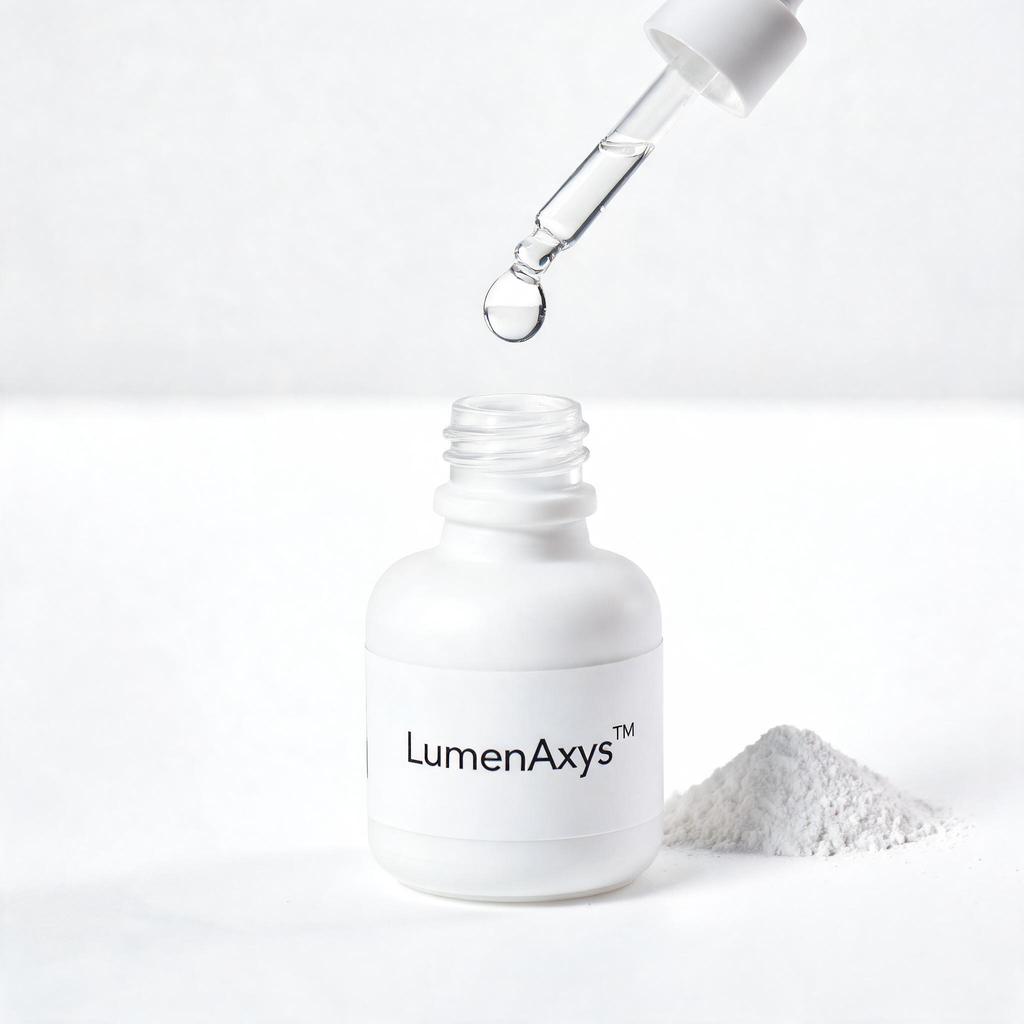
Redefining the Paradigm for Blemish-Prone Skin Repair
Traditional dermatological approaches to blemish-prone skin repair have historically relied heavily on aggressive chemical exfoliation or barrier-stripping antimicrobials. While these methods offer temporary suppression, they frequently compromise the stratum corneum integrity, triggering reactive sebum overproduction and microbial dysbiosis. At LumenAxys™, we engineer blemish-prone skin repair protocols that address the metabolic root causes rather than merely masking symptoms. Our flagship architecture centers on high-purity Zinc PCA, delivering precision sebum modulation without inducing compensatory oil production or inflammatory cascades.
The Biochemical Core: Targeting 5α-Reductase Inhibition
The cornerstone of effective blemish-prone skin repair lies in regulating androgen-driven lipid synthesis. Follicular sebocytes express high concentrations of the enzyme 5α-reductase, which converts testosterone into dihydrotestosterone (DHT). DHT acts as a potent paracrine signal that dramatically upregulates sebum secretion, creating the anaerobic, lipid-rich environment where Cutibacterium acnes proliferates.
Zinc PCA functions as a highly selective competitive inhibitor of 5α-reductase. The coordination complex, represented chemically as Zn2+ bound to the L-prolylcysteine anion (C5H8N2O2-), penetrates the follicular epithelium and binds directly to the enzyme's active site. By sterically hindering the conversion of testosterone to DHT, Zinc PCA reduces sebum output at the molecular level. Unlike topical retinoids or high-dose salicylic acid, this mechanism does not desaminate the skin barrier. Instead, it establishes a homeostatic equilibrium, making it the gold standard for sustainable blemish-prone skin repair.
L-PCA Dynamics: Hydration and Transdermal Permeation
The L-prolylcysteine (L-PCA) moiety within the Zinc PCA complex serves a dual therapeutic function critical for blemish-prone skin repair. First, L-PCA acts as a potent humectant, attracting and retaining water molecules within the epidermis. This mitigates the xerosis often induced by conventional acne therapies. Second, L-PCA functions as a transdermal permeation enhancer. Its amphiphilic structure interacts favorably with keratinocyte membranes, facilitating the deep follicular delivery of the zinc ion without disrupting intercellular lipids. This ensures that the 5α-reductase inhibition occurs precisely where the sebaceous gland resides, maximizing clinical efficacy while preserving the acid mantle.
Industrial Precision: The 50% Liquid Cold-Blend Advantage
For cosmetic formulators seeking reliable blemish-prone skin repair actives, raw material stability dictates final product performance. LumenAxys™ provides a high-purity 50% Zinc PCA liquid concentrate engineered specifically for modern manufacturing workflows. The cold-blend production methodology avoids thermal degradation pathways that typically hydrolyze peptide bonds in amino acid complexes. By maintaining low temperatures during dispersion, the Zn2+-L-PCA coordination geometry remains intact, ensuring batch-to-batch consistency and preventing oxidative browning or precipitate formation.
This 50% liquid format offers distinct industrial advantages:
- Optimized Solubility: The aqueous dispersion allows seamless integration into water-based serums, gel-cleansers, and lightweight emulsions without requiring high-shear homogenization.
- Stability Assurance: Cold processing preserves the bioactive conformation of L-PCA, guaranteeing that the 5α-reductase inhibitory capacity remains at peak potency throughout shelf life.
- Formulation Flexibility: The 50% concentration provides formulators with precise dosing control, enabling accurate incorporation into broad-spectrum blemish-prone skin repair regimens without altering the rheology of carrier fluids.
Clinical Integration & Routine Architecture
To maximize blemish-prone skin repair, Zinc PCA must be strategically layered within a synergistic regimen. We recommend pairing LumenAxys™ Zinc PCA with niacinamide (Vitamin B3) to amplify lipid regulation and suppress inflammatory cytokines like IL-1α and TNF-α. For advanced protocols, a low-dose BHA (e.g., 0.5% salicylic acid) can be introduced twice weekly to complement the metabolic action of Zinc PCA, ensuring clogged follicles are cleared while the 5α-reductase pathway remains suppressed.
When developing a daily protocol for blemish-prone skin repair, consistency outweighs intensity. Apply the Zinc PCA serum immediately after toning, allowing the L-PCA permeation enhancer to drive the zinc complex deep into the pilosebaceous unit. Follow with a lightweight, non-comedogenic emollient and a broad-spectrum SPF 50+ sunscreen. UV radiation accelerates collagen degradation via MMP-1 upregulation and exacerbates post-inflammatory hyperpigmentation; protecting newly repaired tissue is non-negotiable.
Frequently Asked Questions (FAQ)
How quickly does Zinc PCA show results for blemish-prone skin repair?
Clinical trials indicate that visible reduction in sebum output and inflammatory lesions typically emerges within 2 to 4 weeks of consistent daily application. Because Zinc PCA targets the enzymatic root cause rather than just surface debris, the effects are cumulative and sustained.
Can Zinc PCA be combined with other active ingredients?
Absolutely. Zinc PCA exhibits exceptional compatibility with niacinamide, hyaluronic acid, and mild exfoliants. However, avoid simultaneous use with strong oxidizers or highly acidic pH environments (< 3.0) directly upon application, as extreme acidity may alter the coordination stability of the Zn2+ complex. Layering with barrier-supporting lipids enhances tolerance and amplifies blemish-prone skin repair outcomes.
Why choose the 50% liquid over the powder form?
The 50% liquid concentrate streamlines manufacturing. The cold-blend process guarantees zero thermal degradation, ensuring the delicate L-PCA peptide chain remains fully functional. Powder forms require rigorous hydration and pH buffering steps during production, which can introduce variability. The liquid format delivers guaranteed bioavailability and rheological ease for modern serum architectures.
Is this suitable for sensitive, blemish-prone skin?
Yes. Unlike benzoyl peroxide or high-concentration retinoids, Zinc PCA operates through precise enzymatic inhibition rather than cytotoxic exfoliation. The L-PCA component actively hydrates and soothes the epidermis, making it an ideal cornerstone for sensitive patients undergoing blemish-prone skin repair.