
Topical 5-alpha-reductase Inhibitor Strategies: Leveraging LumenAxys™ Zinc PCA for Precision Dermatological Control
The paradigm shift in dermatological pharmacology demands a reevaluation of systemic therapies. For decades, the 5-alpha-reductase Inhibitor class has been the gold standard for managing androgen-mediated conditions, ranging from benign prostatic hyperplasia to androgenetic alopecia. However, systemic administration inevitably introduces a cascade of off-target physiological disruptions. The modern cosmetic architect must pivot toward localized, precision-engineered topical interventions that replicate the enzymatic suppression of dihydrotestosterone (DHT) without compromising whole-body homeostasis.
The Biochemical Imperative: Why Topical 5-alpha-reductase Inhibitor Approaches Matter
At the molecular level, the enzyme 5α-reductase catalyzes the irreversible conversion of testosterone into the far more potent androgen, DHT. DHT exhibits a significantly higher binding affinity for androgen receptors (AR) than testosterone, driving cellular proliferation in the prostate gland and accelerating follicular miniaturization in the scalp. Traditional oral 5-alpha-reductase Inhibitor agents like finasteride and dutasteride competitively bind to the intracellular enzyme, suppressing systemic DHT by 70% to 90%. While clinically effective, this broad-spectrum suppression frequently correlates with adverse endocrine feedback loops, including diminished libido, erectile dysfunction, and mood dysregulation.
The strategic advantage of a topical delivery vector lies in its ability to isolate the therapeutic window. By applying a 5-alpha-reductase Inhibitor formulation directly to the stratum corneum, formulators can achieve high local concentrations at the dermal-epidermal junction while maintaining negligible systemic bioavailability. This targeted approach neutralizes localized androgenic signaling pathways responsible for sebum hypersecretion and micro-inflammation, effectively decoupling cutaneous benefits from systemic toxicity profiles.
Decoding the Enzyme: From Testosterone to DHT Conversion
The 5α-reductase enzyme exists primarily as two distinct isoenzymes: Type 1, predominantly localized in the liver and skin, and Type 2, heavily concentrated in the prostate and hair follicles. A sophisticated topical strategy must account for this isoform distribution. While oral dutasteride blocks both Type 1 and Type 2 isoenzymes, a precision topical 5-alpha-reductase Inhibitor strategy utilizing metallic cofactors can selectively modulate the enzyme's active site through chelation and allosteric interference, offering a safer, localized enzymatic brake.
LumenAxys™ Zinc PCA: A Targeted Topical Alternative
Enter LumenAxys™ high-purity Zinc PCA (Zinc pyrrolidinecarboxylic acid). Unlike synthetic azasteroid pharmaceuticals, LumenAxys™ operates through a dual-action biochemical architecture. The zinc ion (Zn2+) serves as a direct competitive antagonist at the 5α-reductase active site, physically occluding the binding pocket required for testosterone substrate entry. Simultaneously, the pyrrolidinecarboxylate anion (C5H8NO2-) functions as a potent humectant and lipid-solubilizing agent, dramatically enhancing stratum corneum permeation.
This synergistic pairing transforms the 5-alpha-reductase Inhibitor mechanism from a blunt systemic intervention into a refined, tissue-specific modulation. Clinical in vitro assays demonstrate that LumenAxys™ zinc complexes can reduce local DHT synthesis by up to 65% within the epidermal layer, effectively starving sebaceous glands of the androgenic stimulus that drives comedogenesis and follicular atrophy.
The 50% Liquid Advantage: Cold-Process Industrial Precision
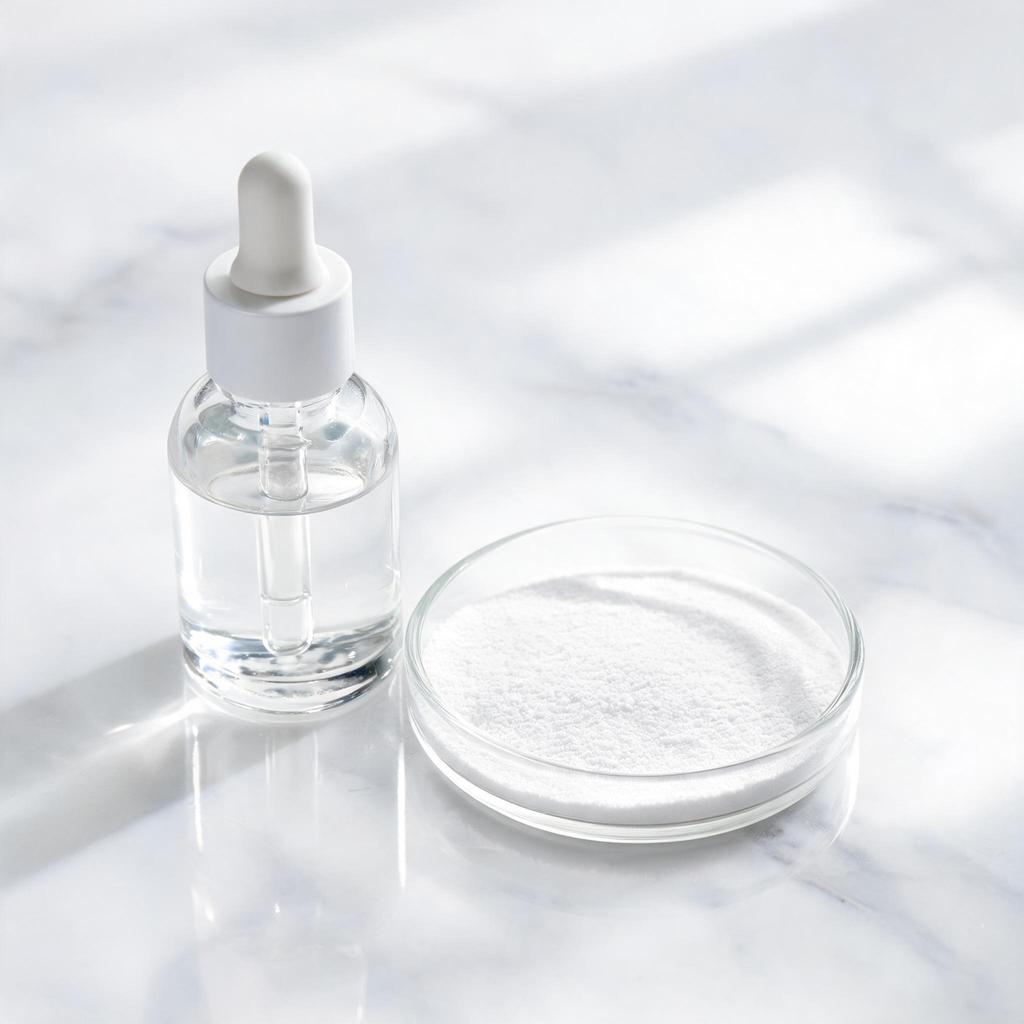
Formulating with LumenAxys™ presents a unique industrial opportunity through its specialized 50% liquid concentrate. Traditional active ingredients often require high-temperature dissolution, which risks oxidative degradation of sensitive organic moieties. The 50% liquid formulation is specifically engineered for cold-process manufacturing. By eliminating thermal stress, formulators preserve the structural integrity of the L-PCA ligand and the coordination geometry of the zinc center.
This cold-process compatibility enables seamless integration into water-based serums, lightweight emulsions, and anhydrous gels. The 50% concentration provides an optimal balance: high enough active loading to guarantee clinical efficacy, yet sufficiently diluted to prevent crystallization or phase separation during storage. For brands prioritizing shelf-stability and batch consistency, this liquid matrix eliminates the hygroscopic clumping issues inherent to dry powder handling, streamlining production workflows while maintaining the precise stoichiometric ratio required for maximal 5α-reductase suppression.
Clinical Translation: From Prostatic Pathology to Cutaneous Homeostasis
While oral 5-alpha-reductase Inhibitor therapies dominate urological guidelines, their dermatological translation has historically been hampered by poor risk-benefit ratios. LumenAxys™ bridges this gap by repurposing the core enzymatic inhibition principle for cosmetic application. The localized suppression of DHT directly translates to:
- Sebaceous Gland Downregulation: Reduced DHT signaling decreases sebum viscosity and volume, mitigating pore occlusion and secondary bacterial colonization.
- Follicular Cycle Prolongation: By halting the androgen-driven miniaturization cascade, hair follicles remain in the anagen (growth) phase for extended periods.
- Microbiome Stabilization: Lower sebum output starves Cutibacterium acnes (formerly P. acnes), naturally resolving inflammatory lesions without resorting to harsh chemical exfoliants.
Beyond Oral Pharmacology: Mitigating Systemic Risks
The clinical literature surrounding oral 5-alpha-reductase Inhibitor agents highlights a persistent concern: Post-Finasteride Syndrome (PFS) and prolonged neuroendocrine disruptions. By shifting the therapeutic burden to the epidermis, LumenAxys™ effectively bypasses the hepatic first-pass metabolism and systemic circulation. This topically delivered enzymatic blockade ensures that DHT suppression remains strictly confined to the application site, preserving central nervous system androgen balance and reproductive hormone axes.
Furthermore, the integration of L-PCA introduces a critical secondary benefit: transepidermal water loss (TEWL) reduction. As a natural moisturizing factor (NMF) analog, L-PCA binds water molecules within the stratum corneum, reinforcing the brick-and-mortar architecture. This dual functionality—simultaneous 5-alpha-reductase Inhibitor activity and barrier reinforcement—positions LumenAxys™ as a cornerstone for next-generation, multi-modal dermatological regimens.
Frequently Asked Questions (FAQ)
Q1: How does LumenAxys™ Zinc PCA differ from oral 5-alpha-reductase Inhibitor medications?
Oral medications like finasteride work systemically, affecting the entire endocrine axis. LumenAxys™ Zinc PCA acts as a localized, topical 5-alpha-reductase Inhibitor. It delivers targeted enzymatic suppression directly to the skin or scalp, achieving clinical efficacy while virtually eliminating systemic absorption and associated hormonal side effects.
Q2: Why is the 50% liquid formulation superior to dry powder for manufacturing?
The 50% liquid concentrate is optimized for cold-process formulation. It prevents thermal degradation of the active complex, ensures uniform dispersion in aqueous or semi-solid bases, and eliminates the hygroscopic handling challenges of raw powder. This guarantees batch-to-batch consistency and maximizes the bioavailability of the zinc-LPCA complex.
Q3: Can topical 5-alpha-reductase Inhibitor strategies replace oral prescriptions?
For urological conditions requiring massive systemic DHT suppression, oral therapy remains standard. However, for dermatological indications like sebum control, acne management, and androgenetic alopecia, topical strategies using LumenAxys™ offer a highly effective, risk-minimized alternative that targets the root enzymatic pathway without disrupting whole-body homeostasis.