
The Dual-Mechanism Powerhouse: Decoding Zinc PCA
In the evolving landscape of dermatological formulation, few ingredients possess the multifaceted efficacy of Zinc PCA. Far more than a simple oil-control agent, Zinc PCA represents a sophisticated biochemical bridge between the metallic properties of zinc and the biological compatibility of pyrrolidone carboxylic acid (PCA). For formulators utilizing LumenAxys™ high-purity Zinc PCA powder and 50% liquid solutions, understanding this molecular synergy is the difference between a standard skincare product and a clinically effective treatment.
Zinc PCA is technically defined as the zinc salt of L-pyrrolidone carboxylic acid. While zinc provides potent antimicrobial and enzymatic inhibitory capabilities, the L-PCA moiety serves a critical dual role: it acts as a Natural Moisturizing Factor (NMF) and significantly enhances the bioavailability of the zinc ion within the stratum corneum.
The Chemistry of Sebum Regulation
The primary demand for Zinc PCA stems from its ability to regulate sebum production at the enzymatic level. Unlike surface-level absorbents like clays, Zinc PCA functions biologically.
- Enzymatic Inhibition: Research indicates that Zinc PCA actively inhibits the activity of 5α-reductase. This enzyme is responsible for converting testosterone into dihydrotestosterone (DHT), the primary hormonal trigger for excessive sebum overproduction. By suppressing this pathway, Zinc PCA addresses the root cause of oily skin rather than merely managing the symptoms.
- Natural Moisturizing Factor (NMF): The L-PCA component is naturally occurring in human skin. It functions as a powerful humectant, drawing moisture into the epidermis. This ensures that while sebum production is curtailed, the skin barrier remains hydrated and supple, preventing the tightness often associated with aggressive acne treatments.
Clinical Evidence: The 28-Day Transformation
Efficacy cannot be claimed without data. An in-vivo study conducted by the manufacturer demonstrated that a topical application of 1% Zinc PCA resulted in a statistically significant reduction in sebum production after 28 days. This clinical validation positions Zinc PCA not as a passive ingredient, but as an active metabolic modulator.
Combating the Acne Microbiome
Beyond sebum, the second pillar of Zinc PCA's efficacy lies in its antimicrobial action. The skin's microbiome is often disrupted by Cutibacterium acnes (formerly P. acnes). In-vitro measurements confirm that Zinc PCA exhibits strong anti-microbial activity against these specific bacterial strains at concentrations between 0.1% and 0.25%. This creates a hostile environment for the bacteria that thrive on excess oil, thereby reducing the inflammatory cascade that leads to papules and pustules.
The LumenAxys™ Advantage: Powder vs. 50% Liquid
For industrial formulators, the choice between raw powder and pre-dissolved liquid is often dictated by processing constraints. LumenAxys™ offers both to accommodate diverse manufacturing workflows.
The 50% Liquid Solution
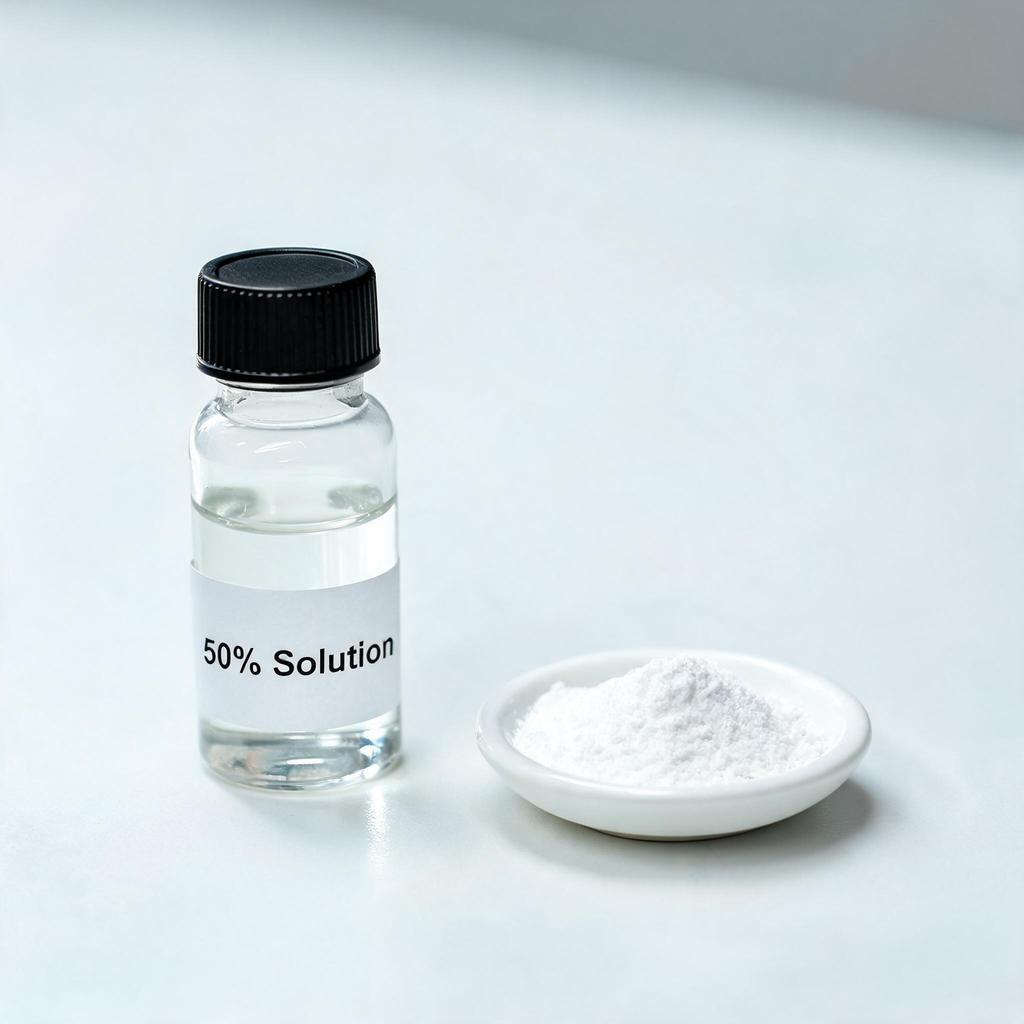
The LumenAxys™ 50% Zinc PCA liquid represents a significant leap in formulation convenience. Traditional Zinc PCA powder can be challenging to disperse uniformly in cold-process aqueous systems. The 50% liquid offers:
- Instant Solubility: Eliminates the need for high-shear mixing or heat activation.
- Stability: Provides a stable, ready-to-use intermediate that integrates seamlessly into serums, toners, and emulsions without risking precipitation.
- Precision Dosing: Liquid forms allow for gravimetric accuracy in automated filling lines.
Advanced Applications: Anti-Aging and Collagen Preservation
While primarily recognized for acne and oil control, Zinc PCA possesses a hidden superpower relevant to anti-aging formulations. A pivotal 2011 study published in the International Journal of Cosmetic Science revealed that Zinc L-pyrrolidone carboxylate inhibits the production of Matrix Metalloproteinase-1 (MMP-1).
MMP-1 is the enzyme responsible for degrading collagen fibers when skin is exposed to UVA radiation. By inhibiting MMP-1, Zinc PCA prevents collagen breakdown. Simultaneously, it was shown to enhance the synthesis of Type I collagen. This dual action—protecting existing collagen and stimulating new production—makes it an invaluable asset in hybrid formulations designed for mature, blemish-prone skin.
Formulation Compatibility
Zinc PCA is remarkably versatile. It pairs exceptionally well with other actives:
- Niacinamide: The classic "Golden Pair". Both regulate oil and strengthen the barrier.
- Vitamin C: Can be combined for oil control and brightening.
- Retinoids: Zinc PCA can offset the potential dryness and irritation caused by retinoids due to its humectant L-PCA component.
Frequently Asked Questions (FAQ)
What is the optimal usage rate for Zinc PCA?
For sebum regulation and mild antimicrobial effects, a concentration of 0.1% to 0.25% is typically sufficient. For intensive acne treatment and significant oil control, rates up to 1% are recommended, as supported by clinical studies.
Does Zinc PCA cause irritation?
Zinc PCA is generally well-tolerated due to the presence of L-PCA, which is identical to molecules naturally found in the skin. However, as with any active ingredient, extremely high concentrations may induce dryness. This is easily managed by balancing the formula with adequate hydration.
Can Zinc PCA be used in haircare?
Absolutely. The same mechanisms that regulate facial sebum are highly effective on the scalp. Zinc PCA is widely used in anti-dandruff shampoos and scalp serums to control greasiness, reduce flaking, and soothe the scalp microbiome.
Why choose the LumenAxys™ 50% liquid over the powder?
The 50% liquid is ideal for formulators seeking speed and consistency. It eliminates the solubility issues associated with raw powder and ensures uniform dispersion in cold-process water-based formulations, saving time and reducing manufacturing errors.