
The Paradigm Shift: From Systemic to Topical 5α-Reductase Inhibition
In the landscape of dermatological science, 5α-Reductase Inhibition has traditionally been the domain of systemic pharmacology. Agents like finasteride and dutasteride have been the gold standard for decades, primarily utilized for benign prostatic hyperplasia and androgenetic alopecia. However, the systemic administration of these drugs carries a complex risk profile, ranging from sexual dysfunction to mood alterations. This reality has catalyzed a paradigm shift toward topical enzymatic modulation. By targeting the enzyme directly at the site of pathology—the sebaceous gland—brands can achieve precise physiological control without the systemic exposure risks associated with oral intake.
LumenAxys™ stands at the vanguard of this innovation. By leveraging high-purity Zinc PCA (Zinc Pyrrolidine Carboxylic Acid), LumenAxys™ enables formulators to harness the power of 5α-Reductase Inhibition safely and effectively within facial serums, oil-control moisturizers, and scalp treatments.
The Biochemistry of 5α-Reductase Inhibition
To understand why LumenAxys™ Zinc PCA is superior for topical applications, we must decode the molecular mechanism. 5α-Reductase is an intracellular enzyme responsible for converting testosterone into dihydrotestosterone (DHT). DHT is a potent androgen that binds to androgen receptors (AR) with significantly higher affinity than testosterone, driving cellular proliferation in the prostate and excessive sebum production in the skin.
The enzyme exists as distinct isoenzymes:
- Type I: Predominantly expressed in the skin (epidermis and sebaceous glands).
- Type II: Predominantly expressed in the prostate and seminal vesicles.
Systemic inhibitors like finasteride primarily target Type II. In contrast, Zinc PCA acts as a competitive inhibitor of Type I 5α-Reductase. By topically applying a Zinc PCA formulation, the zinc ion (Zn2+) chelates with the active site of the Type I isoenzyme in the skin, effectively halting local DHT synthesis. This targeted approach ensures that sebum production is regulated at the source, preventing the cascade of inflammation and keratinization imbalance that leads to acne.
The Dual Advantage of LumenAxys™ Zinc PCA
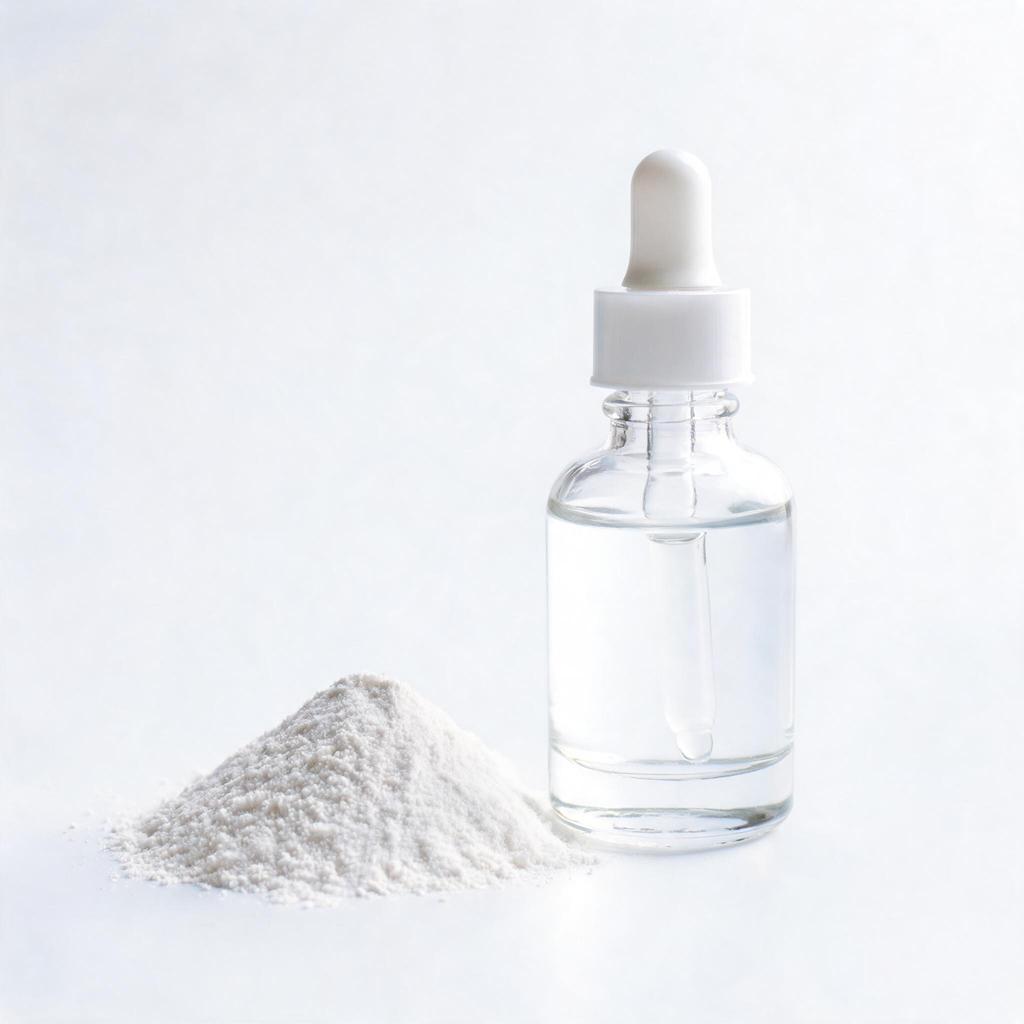
LumenAxys™ differentiates itself through the dual availability of high-purity Zinc PCA Powder and a stable 50% Liquid formulation. This provides formulators with unprecedented flexibility in product development.
1. The Chemistry of the Chelate
The efficacy of Zinc PCA lies in its chemical structure. It consists of a zinc ion coordinated with pyrrolidine carboxylic acid (PCA). This chelation serves two critical functions:
- Enzymatic Precision: The molecular geometry of the chelate mimics the transition state of the 5α-Reductase reaction, allowing for high-affinity binding and potent inhibition of the Type I isoenzyme.
- Hydration & Permeation: The L-PCA moiety acts as a humectant, drawing moisture into the stratum corneum. Unlike harsh exfoliants, L-PCA improves the permeability of the skin barrier, ensuring the Zinc PCA penetrates deep enough to reach the sebaceous glands.
2. Industrial Precision: The 50% Liquid Advantage
For modern "cold-process" formulations, the 50% Zinc PCA Liquid offered by LumenAxys™ is a game-changer. Traditional powder dissolution can be inconsistent, leading to batch variability. The 50% liquid is a pre-solvated, homogenous solution that integrates seamlessly into water-based serums and gel-cleansers without requiring heat activation. This preserves the stability of sensitive co-actives and ensures consistent 5α-Reductase Inhibition in every drop.
Clinical Applications: Targeting Sebum Homeostasis
The application of 5α-Reductase Inhibition extends across multiple dermatological challenges:
- Acne Vulgaris Treatment: By suppressing DHT-driven sebum overproduction, Zinc PCA addresses the root cause of comedones and inflammatory lesions. It creates a hostile environment for Cutibacterium acnes by removing its lipid-rich food source.
- Oil-Control Serums: Ideal for oily and combination skin types. The matting effect is achieved not through drying alcohols, but through biochemical regulation.
- Androgenetic Alopecia Support: While oral 5ARIs are the standard for male pattern hair loss, topical application of Zinc PCA offers a localized approach to scalp sebum regulation and DHT suppression, potentially mitigating follicular miniaturization without systemic absorption.
Safety Profile: The Topical Edge
The most significant advantage of LumenAxys™ Zinc PCA lies in its safety profile. Systemic 5α-Reductase Inhibitors (5-ARIs) are associated with adverse effects such as decreased libido, erectile dysfunction, and in rare cases, mood alterations. Because topical Zinc PCA acts locally within the dermis and epidermis, systemic absorption is negligible. This allows for long-term daily use in skincare regimens, providing continuous enzymatic modulation without the risks inherent to oral pharmacotherapy.
Conclusion
As the beauty industry moves towards precision dermatology, 5α-Reductase Inhibition transitions from a purely medical intervention to a sophisticated skincare mechanism. LumenAxys™ empowers formulators to bridge the gap between clinical efficacy and cosmetic elegance. By utilizing high-purity Zinc PCA powders and liquids, brands can deliver targeted DHT suppression, offering consumers a powerful, safe, and scientifically grounded solution for sebum control and skin refinement.
FAQ: 5α-Reductase Inhibition & LumenAxys™ Zinc PCA
Q: How does Zinc PCA differ from oral 5α-Reductase Inhibitors?
A: Oral inhibitors like finasteride target the Type II isoenzyme and enter the bloodstream, carrying risks of systemic side effects. LumenAxys™ Zinc PCA targets the Type I isoenzyme directly in the skin, acting topically with negligible systemic absorption, making it far safer for cosmetic use.
Q: What is the optimal concentration for 5α-Reductase Inhibition?
A: Clinical studies typically suggest that a concentration of 1% to 5% of Zinc PCA in a final formulation is effective for sebum regulation and DHT suppression.
Q: Can I mix the LumenAxys™ 50% Liquid with my existing serum formula?
A: Yes. The 50% Liquid is water-soluble and chemically stable at room temperature, making it ideal for cold-process integration into serums, toners, and lightweight emulsions.
Q: Does Zinc PCA help with acne scarring?
A: While its primary mechanism is 5α-Reductase Inhibition to prevent active breakouts, the L-PCA component promotes hydration and barrier repair, which supports the healing of post-acne erythema and strengthens the skin's resilience.