
The Biochemistry of the Natural Moisturizing Factor (NMF)
In the complex architecture of human skin, the Natural Moisturizing Factor (NMF) represents the skin's intrinsic mechanism for maintaining homeostasis. It is not merely a passive collection of chemicals, but a dynamic, water-soluble cocktail residing within the stratum corneum. Composed primarily of free amino acids, urea, pyrrolidone carboxylic acid (PCA), and various inorganic salts, the NMF acts as a sophisticated hygroscopic system.
Under normal physiological conditions, the NMF constitutes approximately 10% of the corneocyte mass and up to 30% of the dry weight of the stratum corneum. Its primary biological imperative is to attract atmospheric moisture (H2O) and bind it within the cellular matrix, thereby preserving plasticity and facilitating enzymatic desquamation processes.
Filaggrin Breakdown and the NMF Cascade
The genesis of the NMF is inextricably linked to the protein filaggrin. During keratinocyte differentiation, filaggrin aggregates keratin filaments to form the structural integrity of the corneocytes. In the final stages of cornification, filaggrin is enzymatically hydrolyzed into its constituent amino acids and metabolites. This degradation cascade releases key NMF components:
- Amino Acids: Constituting the bulk of the NMF, they provide immediate humectant properties.
- Pyrrolidone Carboxylic Acid (PCA): A potent hygroscopic agent that stabilizes intracellular osmolarity.
- Urocanic Acid: Provides endogenous UV protection alongside hydration.
When this cascade is disrupted—by genetic mutations (such as filaggrin mutations in atopic dermatitis), environmental stressors, or aggressive cleansing—the NMF pool depletes. This leads to accelerated transepidermal water loss (TEWL), resulting in xerosis and barrier compromise.
LumenAxys™ Zinc PCA: Engineering the Ultimate NMF Enhancer
This is where LumenAxys™ transforms theoretical dermatology into tangible results. By introducing high-purity Zinc PCA into skincare architectures, we do not merely "moisturize"; we actively reconstruct the NMF deficit. Zinc PCA acts as a direct surrogate for the skin's naturally occurring PCA, instantly augmenting the hygroscopic capacity of the stratum corneum.
Dual Action: Humectancy and 5α-Reductase Inhibition
Unlike standard humectants that solely focus on water retention, the zinc ion (Zn2+) in LumenAxys™ provides a secondary, critical mechanism. Zinc is a known inhibitor of the enzyme 5α-reductase. By suppressing this enzyme, LumenAxys™ regulates sebum production at the glandular level. This is pivotal because excessive sebum can physically strip the stratum corneum of its NMF components through emulsification and washing.
The synergy is profound:
- Hydration: The PCA moiety binds water, restoring the osmotic balance within the corneocytes.
- Sebum Regulation: The Zn2+ moiety inhibits 5α-reductase, reducing lipid overflow that compromises the NMF architecture.
- Anti-Inflammatory: Zinc mitigates the cytokine storms often associated with NMF-deficient states like acne or eczema.
Industrial Formulation Mastery: The 50% Liquid Advantage
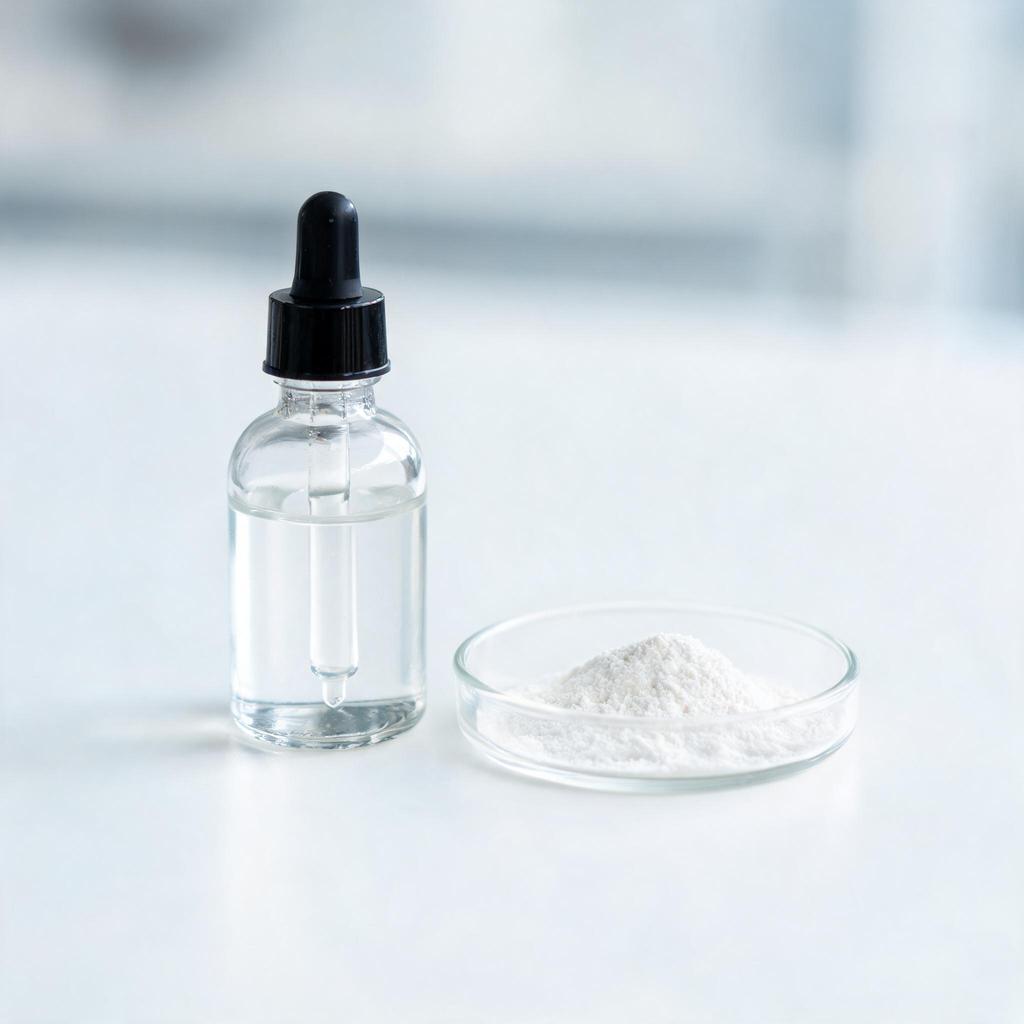
For formulators seeking to engineer advanced NMF-complex serums and emulsions, LumenAxys™ 50% Liquid offers unparalleled industrial utility. Unlike powdered forms that require rigorous dispersion and pH adjustment protocols, the 50% liquid formulation provides:
- Cold-Process Compatibility: It dissolves instantly in aqueous phases without requiring thermal activation, preserving the delicate structure of heat-sensitive co-actives.
- Viscosity Control: The pre-dissolved matrix allows formulators to precisely tune the rheology of NMF-rich formulations, ensuring optimal skin spreadability without greasiness.
- Stability: The stabilized liquid form minimizes oxidative degradation pathways common in high-concentration metal complexes, extending the shelf life of the final consumer product.
Clinical Application: Restoring the NMF Ecosystem
Incorporating LumenAxys™ into daily care routines bridges the gap between damaged skin physiology and ideal homeostasis. For conditions characterized by NMF depletion—such as aging skin, post-procedure recovery, or environmentally induced xerosis—topical application of Zinc PCA acts as a targeted bio-replacement therapy. It penetrates the upper layers of the stratum corneum, integrating seamlessly with endogenous amino acids to re-establish the skin's natural hygroscopic gradient.
Frequently Asked Questions (FAQ)
Does Zinc PCA directly replace missing NMF components?
Yes. Pyrrolidone carboxylic acid (PCA) is a naturally occurring component of the NMF. LumenAxys™ delivers high-purity PCA directly to the stratum corneum, functioning as a bio-identical replacement for depleted NMF reserves.
How does LumenAxys™ differ from standard humectants like glycerin?
While glycerin is an excellent humectant, LumenAxys™ Zinc PCA offers a dual-action mechanism. It provides hydration through the PCA structure, while the zinc ion (Zn2+) actively inhibits 5α-reductase to control sebum and inflammation, offering a comprehensive solution for barrier repair that simple humectants cannot match.
Is the 50% Liquid suitable for sensitive skin formulations?
Absolutely. The 50% liquid is formulated for maximum bioavailability and minimal irritation. Its ease of integration into cold-process formulations ensures that the active ingredients remain stable and effective, making it ideal for sensitive skin regimens focused on NMF restoration.