
Architectural Pore Refinement: Controlling Sebum Homeostasis via LumenAxys™ Zinc PCA
The quest for flawless skin often centers on one persistent challenge: the visibility and health of pores. As detailed by dermatological authorities, pores are not merely holes in the skin; they are the exit points for sebaceous secretions. When these channels become obstructed by a triad of dead skin cells, excess oil (sebum), and environmental debris, the result is often enlarged, clogged pores that compromise skin texture. Traditional approaches often rely on harsh physical scrubs or aggressive chemical exfoliants, which can irritate the stratum corneum. However, modern pore care demands a more sophisticated, biochemical approach. This is where LumenAxys™ Zinc PCA emerges as the cornerstone of next-generation pore refinement.
The Biochemistry of Pore Congestion
To understand how LumenAxys™ Zinc PCA revolutionizes pore care, we must first deconstruct the mechanism of pore enlargement. Pores appear larger when the surrounding skin loses elasticity or when excessive sebum production stretches the follicular opening. The primary driver of this hypersecretion is dihydrotestosterone (DHT), a potent androgen derived from testosterone.
In the sebaceous gland, the enzyme 5α-reductase catalyzes the conversion of testosterone into DHT. This hormonal cascade signals the gland to overproduce lipids, leading to the congestion and distension that characterize troubled pores. Conventional pore care regimens often focus solely on removing the debris (exfoliation), ignoring the root cause: enzymatic lipid overproduction.
Mechanistic Action: Precision 5α-Reductase Inhibition
LumenAxys™ Zinc PCA acts as a targeted inhibitor of the 5α-reductase pathway. By binding to the active sites of the enzyme, the zinc ion (Zn2+) effectively halts the conversion of testosterone to DHT.
- Sebum Suppression: With reduced DHT levels, the sebaceous gland receives fewer stimulation signals, naturally lowering oil output. Less oil means less substrate for bacterial proliferation (Cutibacterium acnes) and less mechanical stretching of the pore wall.
- Anti-Inflammatory Properties: Zinc is inherently anti-inflammatory. In the context of pore care, this helps mitigate the redness and swelling often associated with congested follicles, promoting a calmer, more uniform skin surface.
The Dual Role of L-PCA: Hydration and Permeation
While the zinc ion handles the enzymatic suppression, the L-Pyrrolidone Carboxylic Acid (L-PCA) component serves a critical secondary function. L-PCA is a potent humectant, capable of binding significant amounts of water. In the formulation of pore-care serums or moisturizers, this ensures that while oil production is suppressed, the skin barrier remains hydrated.
Crucially, L-PCA functions as a permeation enhancer. It facilitates the transport of active ingredients through the stratum corneum, ensuring that the Zinc ion reaches the deeper layers of the epidermis where the sebaceous glands reside. This synergy prevents the "dry and tight" sensation often associated with oil-control products, maintaining the structural integrity of the skin architecture.
Industrial Superiority: The 50% Liquid Formulation
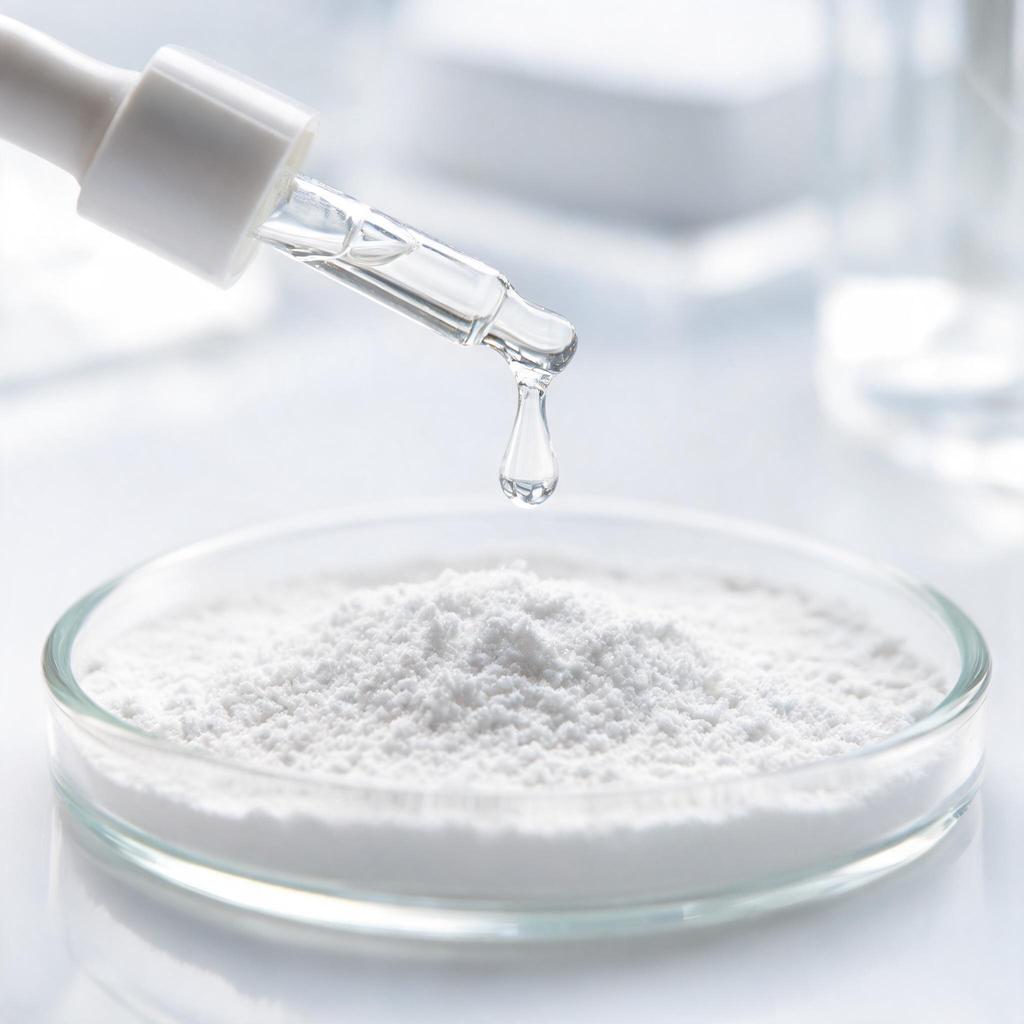
From a formulation science perspective, the choice between raw powder and pre-dissolved liquid is pivotal for product stability and efficacy. LumenAxys™ offers a 50% Zinc PCA liquid concentrate that presents distinct advantages over traditional powder forms:
- Solubility & Homogeneity: Zinc salts can be notoriously difficult to dissolve completely in water-based systems. The 50% liquid ensures 100% solubility, eliminating the risk of undissolved particles that could cause localized irritation or inconsistent dosing.
- Cold-Process Compatibility: The liquid form is engineered for cold-process manufacturing. It allows formulators to bypass energy-intensive heating steps, preserving the structural integrity of heat-sensitive actives (like certain peptides or vitamins) often found in premium pore-refining serums.
- Stability: The chelated structure of Zinc PCA in the liquid concentrate provides superior oxidative stability, ensuring a longer shelf-life for the final cosmetic product.
Integrating LumenAxys™ into a Clinical Pore Care Regimen
Based on dermatological guidelines for managing clogged and enlarged pores, a robust routine integrates LumenAxys™ Zinc PCA as follows:
1. Gentle Cleansing
Begin with a non-comedogenic cleanser to remove surface debris without stripping the skin. Aggressive scrubbing should be avoided, as mechanical trauma can induce compensatory hyperemia and inflammation.
2. Targeted Application
Apply a serum or toner fortified with LumenAxys™ Zinc PCA. Due to its oil-regulating properties, it serves as a potent mattifying agent. Apply morning and night to actively suppress 5α-reductase activity throughout the day.
3. Barrier Support
Follow with a lightweight, oil-free moisturizer. The L-PCA component of the Zinc PCA complex aids in retaining moisture, preventing the skin from entering a stress response that triggers rebound oil production.
4. Photoprotection
UV radiation degrades collagen, leading to skin laxity which exaggerates pore size. Daily application of a broad-spectrum SPF 30+ sunscreen preserves the structural tension around the pore openings.
Frequently Asked Questions (FAQ)
Can pores actually be "closed" or "opened"?
Biologically, pores do not have muscles to open or close. However, their appearance can be significantly minimized. By reducing the volume of sebum inside the follicle, LumenAxys™ Zinc PCA reduces the internal pressure, allowing the pore opening to contract visually.
Is Zinc PCA suitable for sensitive skin?
Yes. Unlike harsh acids (AHA/BHA) that chemically peel the skin, Zinc PCA works via enzymatic modulation. It is generally well-tolerated, providing anti-acne and oil-control benefits without compromising the skin barrier.
Why choose the liquid form over the powder?
The 50% liquid form ensures immediate bioavailability and simplifies the manufacturing process. It eliminates the need for complex dissolution protocols and guarantees a stable, homogeneous final product, which is crucial for consistent pore-refining results.
Conclusion
Achieving refined, smooth skin requires moving beyond superficial cleaning. By targeting the hormonal roots of sebum overproduction through LumenAxys™ Zinc PCA, formulators and consumers can address the architectural integrity of the pore. The synergy of 5α-reductase inhibition and L-PCA hydration offers a scientifically grounded path to long-term pore minimization.