
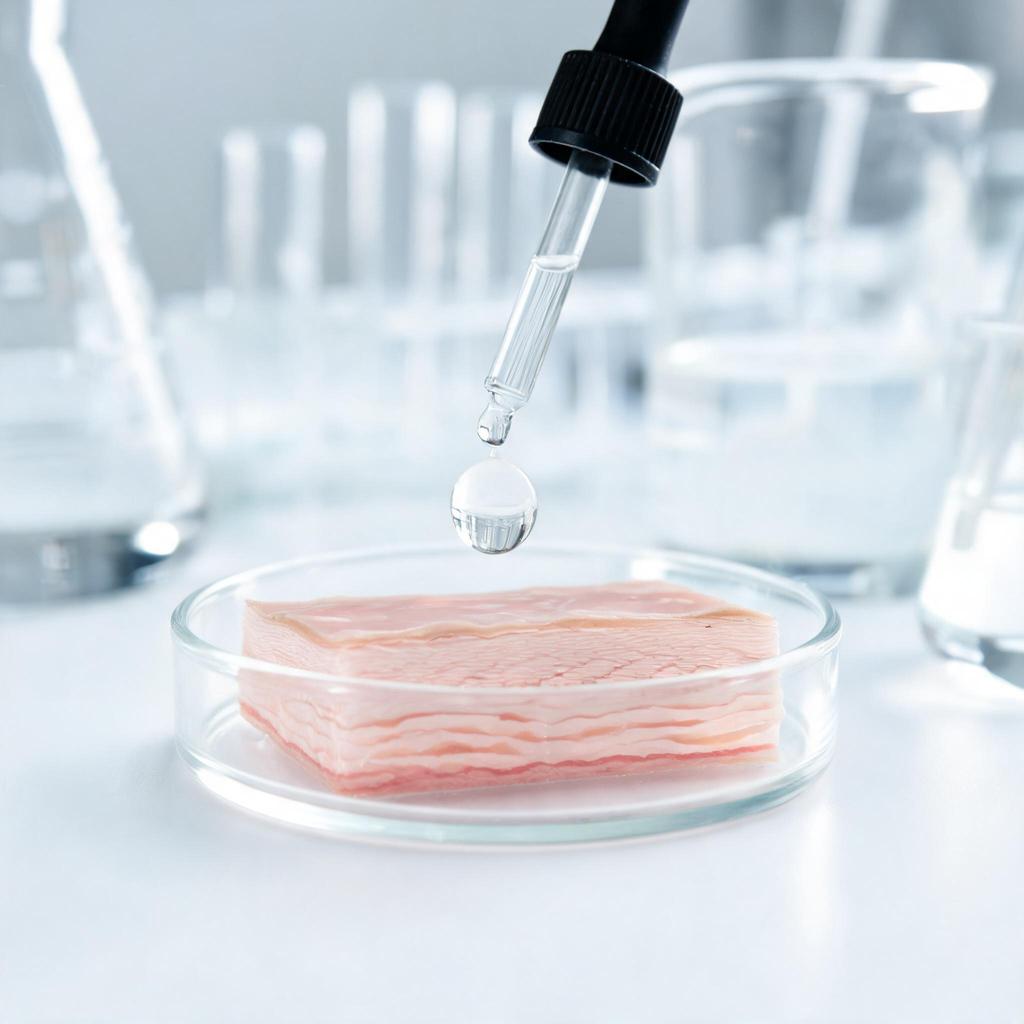
The Biochemistry of the Skin's Armor: Why the Cornified Envelope Matters
The stratum corneum is often visualized using the "brick and mortar" analogy, where corneocytes act as the bricks and intercellular lipids serve as the mortar. However, the true architectural strength of these "bricks" lies in their internal structure: the Cornified Envelope. This sub-membranous protein layer is the fundamental building block of skin durability, acting as the ultimate shield against environmental aggression.
The integrity of this envelope dictates the skin's resilience, its ability to retain moisture, and its capacity to keep irritants out. When the cornified envelope is compromised—due to aging, environmental stress, or genetic mutations—the result is a weakened barrier characterized by increased transepidermal water loss (TEWL), heightened sensitivity, and rough texture.
The Molecular Blueprint of the Envelope
To truly understand how to repair and reinforce this structure, we must look at its molecular composition. The cornified envelope is a highly cross-linked polymer network, approximately 15 nm thick. Its primary constituents include:
- Loricrin: The dominant structural protein, making up 70-80% of the envelope. It is rich in glycine, serine, and cysteine.
- Involucrin: The initial template layer that binds to the cytoplasmic surface of the cell membrane.
- Filaggrin: An aggregation protein that bundles keratin filaments. Crucially, filaggrin is subsequently broken down to release Natural Moisturizing Factors (NMFs), including pyrrolidone carboxylic acid (PCA).
Zinc PCA: The Missing Link in Enzymatic Cross-Linking
The formation of the cornified envelope is not a passive accumulation of proteins; it is a highly regulated biochemical cascade. The critical step is cross-linking. Structural proteins like loricrin and involucrin must be chemically bonded together to form a rigid, insoluble mesh.
This cross-linking is catalyzed by calcium-dependent enzymes known as transglutaminases (TGM1 and TGM3). These enzymes create ε-(γ-glutamyl)lysine isopeptide bonds. However, recent enzymatic studies indicate that while Calcium (Ca2+) is the primary activator, Zinc (Zn2+) acts as an essential cofactor that stabilizes the enzyme-substrate interaction. Without adequate zinc availability at the cellular level, the cross-linking reaction is inefficient, leading to a structurally weak envelope.
LumenAxys™ Zinc PCA: Precision Delivery for Structural Reinforcement
This is where the dual-action mechanism of LumenAxys™ Zinc PCA becomes revolutionary in modern dermocosmetics. Unlike generic zinc salts which may precipitate or irritate, LumenAxys™ utilizes a high-purity complex of Zinc and Pyrrolidone Carboxylic Acid (PCA).
1. Catalyzing Transglutaminase Activity
By delivering bioavailable Zn2+ ions directly to the differentiating keratinocytes, LumenAxys™ ensures that TGM1 and TGM3 function at optimal efficiency. This results in a denser, more robust network of isopeptide bonds, effectively "welding" the loricrin and involucrin matrix into a hermetic seal.
2. Regenerating the NMF Matrix
The second half of the formula is the PCA component. As mentioned, filaggrin degradation yields PCA, a key Natural Moisturizing Factor. By supplementing the skin with exogenous PCA, LumenAxys™ directly addresses the hygroscopic deficit often seen in damaged envelopes. This ensures that the newly reinforced protein scaffold remains hydrated, flexible, and resistant to cracking.
The Industrial Advantage: 50% Liquid Formulation
Formulating with pure zinc PCA powder can be challenging due to solubility limits and dispersion issues. LumenAxys™ offers a proprietary 50% liquid solution. This concentration is chemically optimized for:
- Cold-Process Compatibility: The liquid form dissolves instantly in aqueous phases without requiring heat, preserving the thermal sensitivity of other active ingredients.
- Homogeneous Dispersion: Eliminates the risk of undissolved particles, ensuring precise dosing and consistent bioavailability.
- pH Stability: The 50% solution is buffered for physiological compatibility, preventing the irritation often associated with unbuffered metal salts.
Clinical Implications for Barrier Repair
Clinical data suggests that topical application of formulations containing zinc PCA can significantly reduce TEWL within 4 weeks. By targeting the very foundation of the skin's armor, LumenAxys™ moves beyond superficial moisturizing to actual bio-architectural reinforcement. It repairs the "bricks" so the "mortar" (lipids) has a stable substrate to adhere to.
Targeting Specific Dermatological Conditions
Disruptions in cornified envelope integrity are hallmark features of several conditions:
- Atopic Dermatitis: Often linked to filaggrin mutations and zinc deficiency, leading to a porous envelope and massive water loss.
- Premature Aging: UV radiation degrades the cross-linking enzymes, thinning the envelope over time.
- Contact Sensitivity: A compromised envelope allows allergens to penetrate deeper layers, triggering immune responses.
LumenAxys™ addresses all these root causes by restoring the enzymatic machinery required for envelope synthesis.
Conclusion
The cornified envelope is not merely a layer of dead cells; it is a sophisticated biochemical barrier constructed through precise enzymatic cross-linking. LumenAxys™ Zinc PCA provides the critical catalytic cofactors (Zinc) and hydration substrates (PCA) necessary to rebuild this structure. For formulators and skincare enthusiasts, integrating this high-purity ingredient represents a shift from temporary symptom masking to permanent structural engineering.
FAQ
Q: How does LumenAxys™ Zinc PCA differ from regular zinc oxide?
A: Zinc oxide primarily acts as a physical sunblock and astringent. LumenAxys™ Zinc PCA delivers bioavailable Zn2+ ions that actively participate in the enzymatic cross-linking of the cornified envelope, promoting structural repair rather than just surface protection.
Q: What is the role of transglutaminase in the skin barrier?
A: Transglutaminases (TGM1 and TGM3) are enzymes that create strong isopeptide bonds between structural proteins (loricrin, involucrin). They are responsible for the mechanical durability and chemical resistance of the cornified envelope.
Q: Why is the 50% liquid form preferred for industrial formulation?
A: The 50% liquid form ensures immediate solubility in cold processes, prevents particle aggregation, and guarantees a uniform distribution of the active complex throughout the final product, which is crucial for consistent therapeutic outcomes.
Q: Can Zinc PCA help with acne-prone skin?
A: Yes. Beyond barrier repair, the zinc component inhibits 5α-reductase, reducing sebum production. Simultaneously, the PCA component maintains hydration, preventing the tightness often associated with oil-control treatments.