
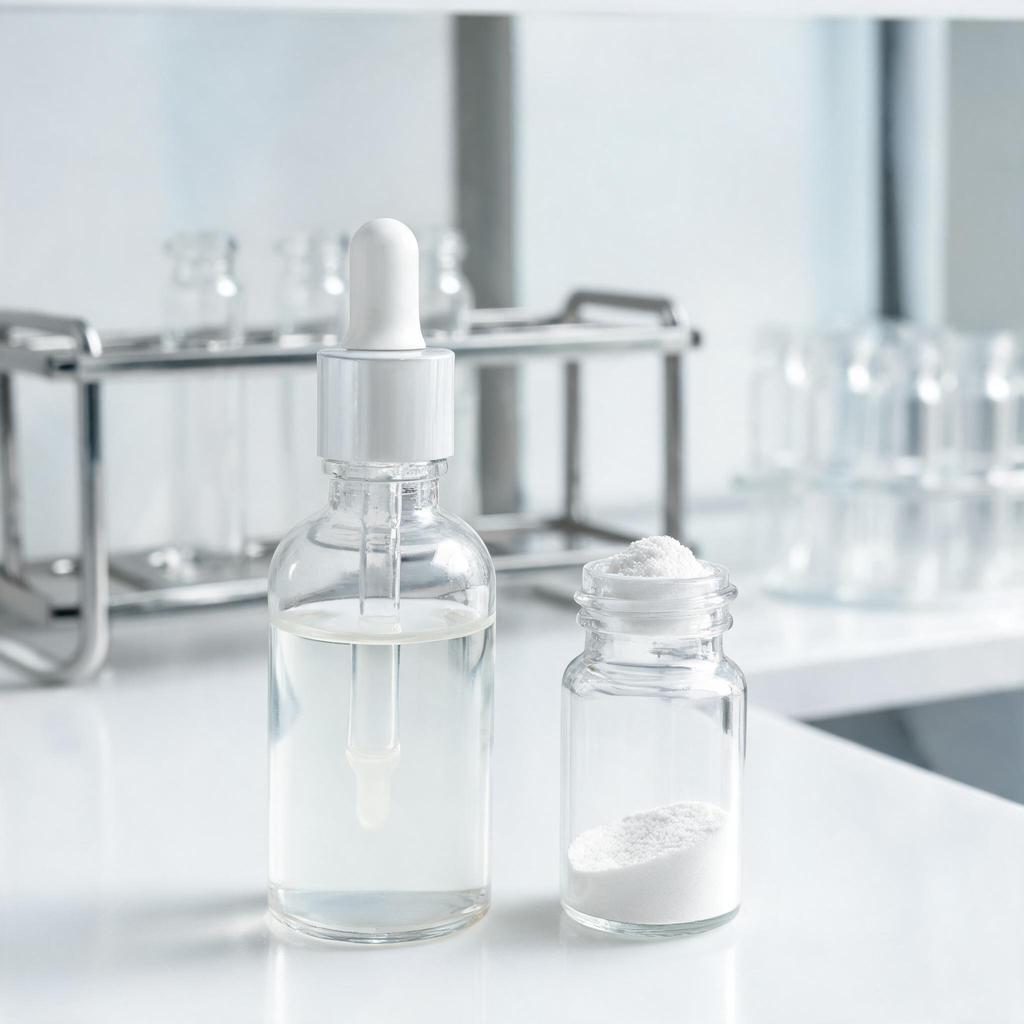
The Molecular Target: Decoding the 5-alpha reductase inhibition mechanism
In dermatological formulation, understanding the 5-alpha reductase inhibition mechanism is paramount for developing next-generation sebum regulators and anti-androgenic skincare. At the cellular level, the enzyme 5α-reductase catalyzes the irreversible conversion of testosterone into dihydrotestosterone (DHT). This potent androgen binds to intracellular androgen receptors, triggering cascades that drive sebaceous gland hyperplasia, excessive lipid synthesis, and follicular miniaturization. While oral pharmaceuticals like finasteride and dutasteride achieve systemic suppression by competitively binding to the enzyme's active site, modern cosmetic science demands a targeted topical alternative that avoids systemic absorption.
LumenAxys™ high-purity Zinc PCA bridges this gap. By delivering precisely chelated zinc ions (Zn2+) directly to the epidermis and upper dermis, the formulation engages the 5-alpha reductase inhibition mechanism at the source of sebum production. Unlike oral azasteroids, topical zinc acts as a reversible allosteric modulator. The zinc ion inserts itself into the catalytic pocket of the 5α-reductase isoenzymes, sterically hindering substrate access without permanently denaturing the protein. This localized enzymatic modulation effectively downregulates local DHT synthesis, reducing cutaneous oil production while maintaining physiological androgen balance elsewhere in the body.
Precision Topical Modulation vs. Systemic Inhibition
Traditional 5-ARIs rely on hepatic metabolism and carry risks of systemic side effects. The 5-alpha reductase inhibition mechanism in LumenAxys™ formulations is engineered for cutaneous specificity. By utilizing a high-concentration 50% liquid matrix, the active complex achieves rapid stratum corneum penetration. This ensures that the enzymatic interaction occurs exclusively within the pilosebaceous unit. Formulators leveraging LumenAxys™ can thus claim targeted oil control and pore refinement without the nocebo or physiological burdens associated with oral dosing.
The Dual Action of Zn2+ and L-PCA
The efficacy of the 5-alpha reductase inhibition mechanism in LumenAxys™ is amplified by the synergistic chemistry of its components. The molecular architecture of Zinc PCA is represented as C4H7NZnO2. The L-PCA (pyrrolidinecarboxylic acid) moiety serves two critical functions:
- Multivalent Hydration: L-PCA is a primary Natural Moisturizing Factor (NMF) constituent. It binds water molecules efficiently, maintaining stratum corneum hydration levels above 20%, which paradoxically supports barrier integrity even while reducing surface oil.
- Promoted Permeation: The L-PCA structure acts as a carrier vehicle. Its amphiphilic nature facilitates the transport of the chelated Zn2+ through the lipid bilayers of the epidermis, ensuring the zinc reaches the sebaceous gland ducts where the 5-alpha reductase inhibition mechanism is most needed.
Cold-Process Industrial Advantages of the 50% Liquid
For manufacturing precision, the 50% liquid variant of LumenAxys™ offers distinct cold-process advantages. Traditional zinc salts often require thermal processing that risks hydrolysis or oxidative degradation of the PCA chelate. LumenAxys™ utilizes advanced solvation techniques that maintain structural integrity at ambient temperatures. This cold-processing compatibility ensures:
- Chelate Stability: Prevents premature dissociation of Zn2+, guaranteeing that the active complex remains bioavailable upon topical application.
- Formulation Flexibility: The 50% concentration allows cosmetic chemists to easily adjust final product viscosity and active dosing without introducing heat-sensitive excipients.
- Batch Consistency: Eliminates thermal degradation pathways, ensuring every milliliter delivers the exact enzymatic modulation capacity required for reliable 5-alpha reductase inhibition mechanism activation.
Clinical Translation: Sebum Homeostasis & Pore Refinement
Translating the 5-alpha reductase inhibition mechanism into consumer-facing benefits yields tangible results. By locally suppressing DHT-driven lipid synthesis, LumenAxys™ formulations deliver sustained matte finishes, reduced comedone formation, and refined pore appearance. The concurrent moisturizing action of L-PCA prevents the compensatory dryness often seen with harsh oil-control agents. Whether integrated into daily serums, lightweight moisturizers, or pre-makeup primers, this precise enzymatic targeting represents a paradigm shift from brute-force astringents to intelligent biochemical modulation.
Frequently Asked Questions (FAQ)
How does the 5-alpha reductase inhibition mechanism work topically?
Topically, Zn2+ from LumenAxys™ Zinc PCA binds reversibly to the active sites of sebaceous 5α-reductase. This steric hindrance blocks the conversion of testosterone to DHT locally, reducing oil production without entering systemic circulation.
Why is the 50% liquid preferred for cold-process manufacturing?
The 50% liquid maintains the thermodynamic stability of the Zinc-PCA chelate without requiring heat. This preserves the molecular integrity of the active complex, ensuring consistent dosing and optimal skin permeation during formulation mixing.
Does L-PCA contribute to the 5-alpha reductase inhibition mechanism?
Yes. L-PCA acts as a permeation enhancer and humectant. It helps transport the chelated zinc deeper into the epidermis and maintains hydration, creating an optimal microenvironment for the enzymatic modulation to occur efficiently.
Can LumenAxys™ replace oral 5-ARIs for hair loss or acne?
LumenAxys™ is designed for topical cosmetic use. While it targets the same enzymatic pathway, it operates locally on the skin/hair follicle. It is not a substitute for prescription oral medications for systemic conditions, but offers a highly effective, side-effect-free alternative for topical sebum regulation and follicular health.