
Beyond Lipid Supplementation: Engineering Ultimate Barrier Repair with LumenAxys™ Zinc PCA Architectures
The Biological Imperative: Understanding the Stratum Corneum
The epidermal barrier, primarily housed within the stratum corneum, functions as the body's primary defense mechanism against environmental assault. Structurally, it operates on a sophisticated "brick and mortar" paradigm: fully keratinized corneocytes serve as the structural bricks, while a tightly organized lipid matrix acts as the binding mortar. This intercellular lipid bilayer consists of approximately 50% ceramides, 25% cholesterol, and 25% free fatty acids. When this architecture is compromised by over-exfoliation, alkaline cleansing agents, or oxidative stress, the lipid raft organization collapses. Consequently, transepidermal water loss (TEWL) accelerates exponentially, rendering the skin vulnerable to pathogenic invasion, inflammatory cascades, and accelerated photoaging.
Diagnosing Barrier Compromise and the Inflammatory Feedback Loop
Clinical indicators of a fractured barrier include persistent xerosis, reactive erythema, stinging sensations upon application of previously tolerated actives, and a visible loss of radiance. Crucially, barrier disruption triggers a localized inflammatory response. Stress signals upregulate pro-inflammatory cytokines such as IL-6 and TNF-α, which in turn stimulate 5α-reductase activity. This enzymatic surge converts circulating testosterone into dihydrotestosterone (DHT), exacerbating sebaceous hyperactivity and creating a vicious cycle that continuously weakens the lipid matrix. Traditional repair protocols often fail because they merely patch the structural holes with exogenous ceramides, ignoring the underlying enzymatic driver of barrier fragility.
The LumenAxys™ Paradigm Shift: Zinc PCA in Barrier Restoration
Conventional barrier repair relies heavily on lipid replacement. While necessary, passive supplementation lacks the regulatory intelligence to halt the inflammatory cascade. LumenAxys™ Zinc PCA introduces a dual-action mechanism targeting both structural integrity and metabolic control, bridging the gap between symptomatic relief and true physiological restoration.
Enzymatic Precision: Competitive 5α-Reductase Inhibition
The core innovation lies in the chelated Zn2+ ion. Zinc acts as a competitive inhibitor at the catalytic site of 5α-reductase, specifically binding to conserved cysteine residues within the enzyme's active pocket. By blocking the conversion of testosterone to DHT, LumenAxys™ effectively severs the hormonal trigger that drives barrier stress and sebaceous overproduction. This enzymatic suppression prevents the inflammatory feedback loop, allowing the stratum corneum to realign its lipid architecture without the interference of androgen-driven irritation. The result is a proactive stabilization of the epidermal defense system.
L-PCA: Osmotic Hydration and Permeation Enhancement
Pyrrolidone carboxylic acid (L-PCA) is a cornerstone of the Natural Moisturizing Factor (NMF). In its free acid form, L-PCA functions as a potent osmolyte, aggressively drawing and retaining H2O within the corneocytes. When complexed with zinc, the resulting salt maintains exceptional aqueous solubility and bioavailability. The L-PCA moiety actively enhances topical permeation, acting as a penetration enhancer that guides reparative molecules through the lipid bilayer. This ensures that co-formulated ceramides, cholesterol analogues, and peptide chains achieve optimal intracellular delivery, maximizing the efficiency of the repair process.
Industrial Advantage: The 50% Liquid Cold-Process Formulation
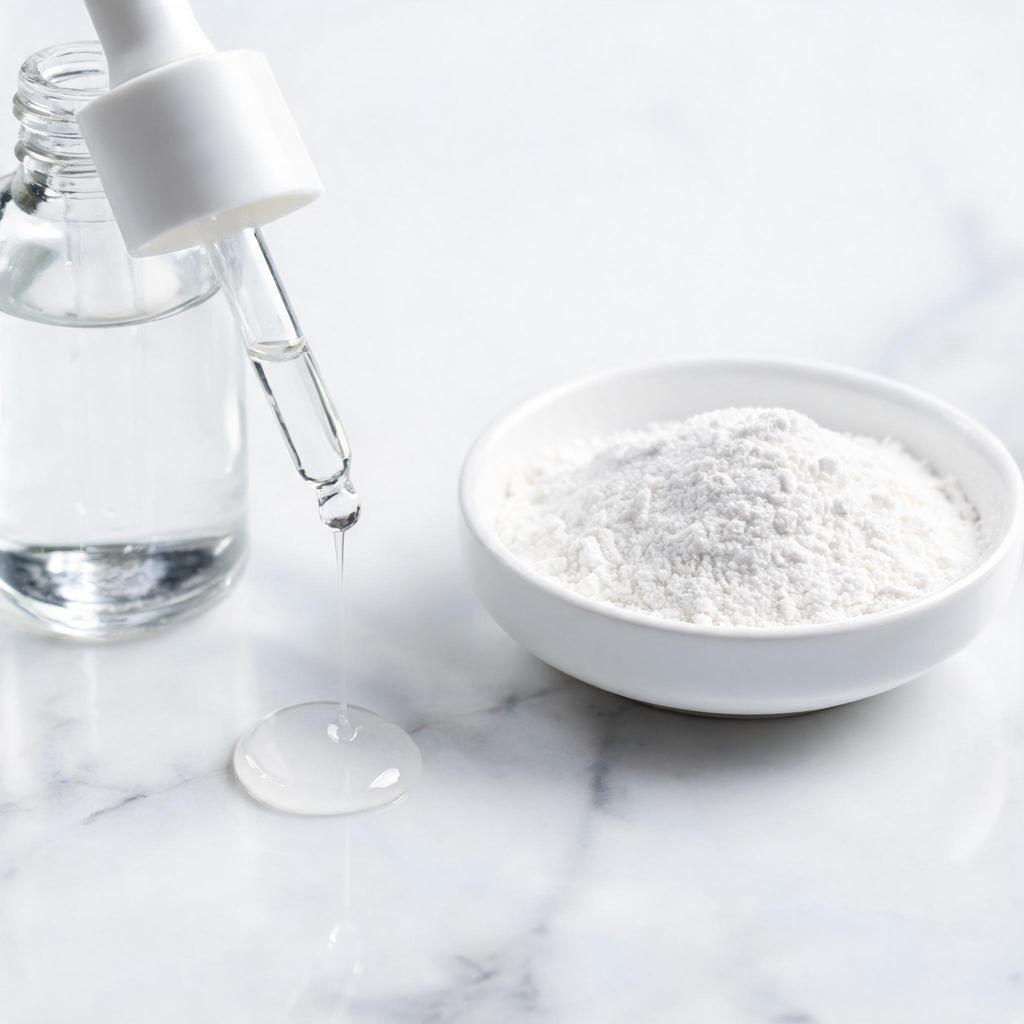
Formulating with traditional zinc powders often necessitates high-temperature processing to ensure complete dissolution, which inadvertently degrades heat-sensitive barrier-repair ingredients. LumenAxys™ 50% liquid concentrate is engineered specifically for cold-processing compatibility. This liquid matrix guarantees 100% dissolution without thermal stress, preserving the biological potency of delicate lipids, unstable peptides, and botanical extracts. The liquid form also eliminates the dissolution variability and clumping issues inherent to powder blending, ensuring precise dosing and homogenous dispersion within anhydrous gels, serums, or low-water emulsions.
Strategic Formulation Architectures for Resilient Barriers
To maximize barrier reconstruction, LumenAxys™ Zinc PCA integrates seamlessly into advanced delivery systems designed for clinical-grade efficacy:
- Liposomal & Niosomal Encapsulation: Co-formulating with phospholipid vesicles shields the Zn2+-PCA complex from premature oxidation. The vesicles fuse selectively with the stratum corneum, enabling targeted, sustained release directly within the upper epidermal layers.
- Multi-Molecular Weight Hydration Networks: Pairing the zinc complex with crosspolymerized hyaluronates (NaHA) creates a three-dimensional hydrogel network. This matrix physically mitigates TEWL while the zinc component regulates enzymatic inflammation, providing immediate occlusion alongside long-term biological repair.
- pH Optimization & Acid Mantle Preservation: The L-PCA buffer system naturally stabilizes formulations at a skin-compatible pH of ~5.5. Maintaining this acidic environment is critical for preserving the acid mantle, optimizing antimicrobial defense, and ensuring the optimal activity of barrier-supporting enzymes like transglutaminase.
Clinical Outcomes and Long-Term Epidermal Resilience
Consistent application of LumenAxys™ Zinc PCA architectures yields measurable improvements in barrier metrics. Clinical observations indicate a marked reduction in TEWL scores, decreased erythema indices, and accelerated recovery from procedural trauma (e.g., post-laser resurfacing or chemical peeling). The synergistic action of enzymatic inhibition and osmotic hydration transitions the skin from a reactive, fragile state to a fortified, self-sustaining ecosystem. By addressing both the structural deficit and the enzymatic driver of barrier compromise, LumenAxys™ establishes a new standard in dermatological precision skincare.
Frequently Asked Questions (FAQ)
How long does it take for LumenAxys™ Zinc PCA to visibly repair a damaged skin barrier?
Visible improvements in skin comfort, reduced redness, and improved hydration typically manifest within 14 to 21 days of consistent use. Complete structural realignment of the stratum corneum, reflecting full lipid matrix restoration, generally requires 4 to 8 weeks, aligning perfectly with the natural epidermal turnover cycle.
Can LumenAxys™ Zinc PCA be safely combined with retinoids or AHAs during barrier repair?
Yes, but requires strategic scheduling. Because Zinc PCA suppresses 5α-reductase-driven inflammation, it provides a protective buffer against the irritation commonly associated with retinoids and alpha hydroxy acids. To prevent synergistic irritation, apply the Zinc PCA serum at night to support overnight repair, and reserve active exfoliants for morning routines, or space applications by several hours to allow the barrier to stabilize.
Why choose the 50% liquid over the powder for barrier repair formulations?
The 50% liquid is engineered for cold-process manufacturing. It ensures 100% dissolution without heat degradation, preserves the bioactivity of delicate lipid analogues (like ceramides and cholesterol), and offers superior batch consistency compared to powder dispersion, which can suffer from clumping or uneven distribution in low-viscosity serums and anhydrous gels.
Does LumenAxys™ Zinc PCA help with post-procedural skin recovery?
Absolutely. Post-laser, microneedling, or chemical peel, the skin barrier is critically compromised. The Zn2+ ion accelerates wound healing by modulating fibroblast activity and supporting collagen synthesis, while the L-PCA component rapidly restores intracellular hydration. This dual action significantly shortens the recovery timeline and minimizes the risk of post-inflammatory hyperpigmentation.