
Disrupting the Androgen Cascade: Advanced 5α-Reductase Inhibition with LumenAxys™ Zinc PCA
In the complex landscape of dermatological science, the regulation of sebum and the management of androgen-related skin conditions represent one of the most significant challenges for formulators and dermatologists alike. At the heart of this challenge lies the enzyme 5α-reductase. This intracellular enzyme is responsible for converting testosterone into dihydrotestosterone (DHT), a potent androgen that drives sebum overproduction, follicular miniaturization, and inflammatory acne lesions. While oral 5α-reductase inhibitors (5-ARIs) like finasteride and dutasteride have revolutionized urological and trichological treatments, their systemic side-effect profiles limit their appeal for cosmetic applications. This is where LumenAxys™ Zinc PCA emerges as the premier topical alternative.
By leveraging high-purity Zinc PCA in both powder and 50% liquid forms, LumenAxys™ offers formulators a precise, safe, and highly effective mechanism for topical 5α-reductase inhibition. This article delves into the biochemical architecture of this inhibition, the synergistic benefits of L-PCA, and the industrial advantages of the liquid concentrate.
The Biochemistry of Topical 5α-Reductase Inhibition
To understand the efficacy of LumenAxys™ Zinc PCA, one must first appreciate the enzymatic pathway it disrupts. 5α-reductase exists primarily in two isoforms: Type I and Type II. In the skin, Type I is predominant, whereas Type II is more prevalent in the prostate and seminal vesicles. DHT, the product of this enzymatic conversion, binds to androgen receptors in sebaceous glands, triggering hyperplasia and excessive lipid synthesis.
Oral 5-ARIs work by systemically blocking these enzymes, but they lack tissue specificity. In contrast, Zinc PCA provides targeted topical intervention. The zinc ion (Zn2+) acts as a competitive inhibitor of the 5α-reductase enzyme. By occupying the enzyme's active site, it prevents the conversion of testosterone to DHT directly at the site of action—the skin and scalp.
The Dual Action: Enzymatic Suppression and Hydration
What distinguishes LumenAxys™ Zinc PCA from other topical zinc salts is the inclusion of Pyrrolidine Carboxylic Acid (PCA). PCA is a critical component of the skin's Natural Moisturizing Factors (NMF).
- Mechanism of Inhibition: The zinc moiety directly interferes with 5α-reductase activity, reducing local DHT levels without the systemic absorption associated with oral medications. This makes it an ideal candidate for acne serums and scalp treatments.
- Moisturizing Synergy: The L-PCA component acts as a humectant, drawing moisture into the stratum corneum. This creates a dual-action effect: while the zinc component dries out excess oil and inhibits androgen activity, the PCA component ensures the skin barrier remains hydrated and resilient, preventing the desiccation often associated with harsh acne treatments.
LumenAxys™ Product Portfolio: Powder vs. 50% Liquid
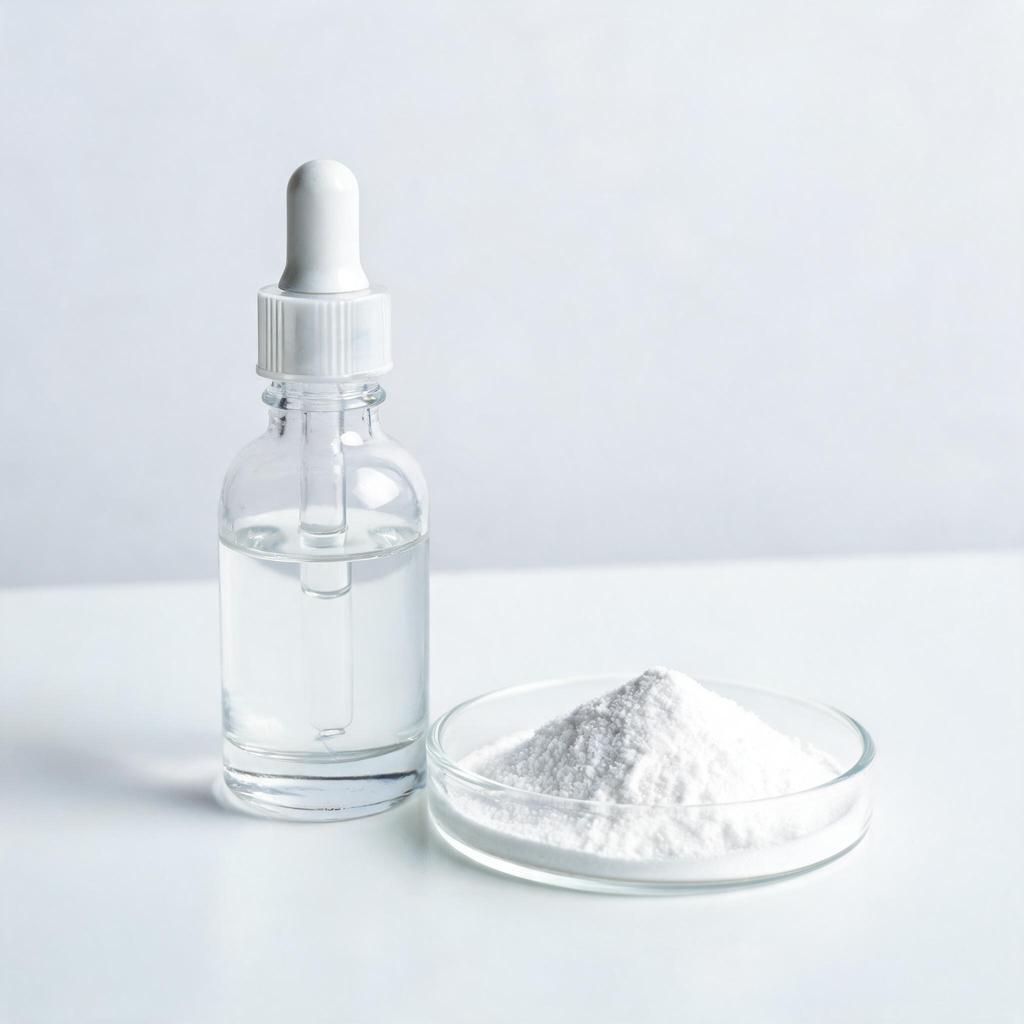
LumenAxys™ offers Zinc PCA in two distinct formats to cater to diverse formulation requirements: high-purity powder and a stabilized 50% liquid solution.
High-Purity Zinc PCA Powder: Versatility and Concentration
The powder form offers maximum flexibility for advanced formulators. Its high purity ensures batch-to-batch consistency and allows for precise dosing in anhydrous formulations, such as dry shampoos, foot powders, or solid deodorants. The crystalline structure ensures stability in dry environments, making it ideal for products where water activity must be minimized.
The 50% Liquid Solution: Cold Formulation Advantage
The 50% liquid concentrate represents a breakthrough in industrial efficiency. Traditional zinc salts often require heat or complex solubilizers to dissolve. The LumenAxys™ 50% liquid is pre-solubilized in a stable aqueous base.
This format offers several distinct advantages:
- Cold Process Compatibility: It can be incorporated into serums, mists, and spray-on treatments without the need for heating, preserving the integrity of heat-sensitive actives like peptides or vitamins.
- Enhanced Permeation: The liquid vehicle is optimized for rapid skin absorption, ensuring the Zinc PCA reaches the sebaceous glands efficiently.
- Cost-Efficiency: It eliminates the labor-intensive step of dissolving powders, reducing manufacturing time and energy consumption.
Clinical Efficacy and Safety Profile
When evaluating 5α-reductase inhibition, safety is paramount. Literature regarding oral 5-ARIs (such as finasteride and dutasteride) highlights potential adverse effects, including sexual dysfunction, mood alterations, and metabolic shifts. These systemic risks are largely absent with topical Zinc PCA.
Clinical observations suggest that topical Zinc PCA provides a robust safety margin. Because it acts locally on the skin surface and within the follicle, systemic bioavailability is negligible. This makes LumenAxys™ Zinc PCA suitable for sensitive populations, including adolescents suffering from early-onset acne, where hormonal balance is delicate.
Targeting Acne and Sebum Regulation
In the context of acne vulgaris, the overactivity of 5α-reductase leads to sebum plugging and bacterial proliferation (Cutibacterium acnes). By inhibiting this enzyme, LumenAxys™ Zinc PCA addresses the root hormonal driver of oily skin. Unlike salicylic acid, which works via exfoliation, Zinc PCA modulates the hormonal signal itself, offering a preventative approach to breakouts.
Formulating with LumenAxys™ Zinc PCA
Integrating LumenAxys™ Zinc PCA into cosmetic architectures requires attention to pH and stability. Zinc PCA is most stable in a slightly acidic to neutral pH range (typically pH 5.0 to 7.0). This aligns perfectly with the skin's natural acid mantle.
Compatibility and Stability
Zinc PCA exhibits excellent compatibility with common cosmetic excipients. It does not precipitate easily in alcohol-based toners or water-based serums. However, formulators should avoid combining it with high concentrations of chelating agents that might strip the zinc ion. The 50% liquid form simplifies this process, offering a ready-to-use solution that integrates seamlessly into oil-control serums, mattifying primers, and scalp sprays.
As the demand for "bio-hacking" skincare grows, ingredients that offer targeted enzymatic modulation without systemic risks are becoming the gold standard. LumenAxys™ Zinc PCA stands at the forefront of this movement, bridging the gap between pharmaceutical efficacy and cosmetic safety.
Frequently Asked Questions (FAQ)
Is LumenAxys™ Zinc PCA safe for daily use?
Yes. Unlike oral 5α-reductase inhibitors which carry systemic risks (e.g., sexual side effects), topical Zinc PCA acts locally. It is gentle enough for daily use in serums and moisturizers, offering continuous sebum regulation without the adverse effects associated with finasteride or dutasteride.
How does Zinc PCA compare to Salicylic Acid for acne?
Salicylic acid functions as a keratolytic, exfoliating dead skin cells to unclog pores. Zinc PCA works upstream by inhibiting the enzyme that triggers excess oil production. Combining both can offer a comprehensive approach: Zinc PCA reduces the hormonal drive for oil, while salicylic acid clears existing debris.
Can the 50% liquid be used in spray formulations?
Absolutely. The 50% liquid form is specifically designed for easy integration into aqueous sprays, such as dry shampoos, facial mists, or antiperspirant sprays. Its solubility ensures no residue or cloudiness in the final product.
Does Zinc PCA help with hair loss?
Yes. Since DHT is the primary driver of androgenetic alopecia, inhibiting 5α-reductase topically can help slow follicular miniaturization. LumenAxys™ Zinc PCA scalp treatments can be formulated as leave-on serums to target the root cause of hormonal hair loss.